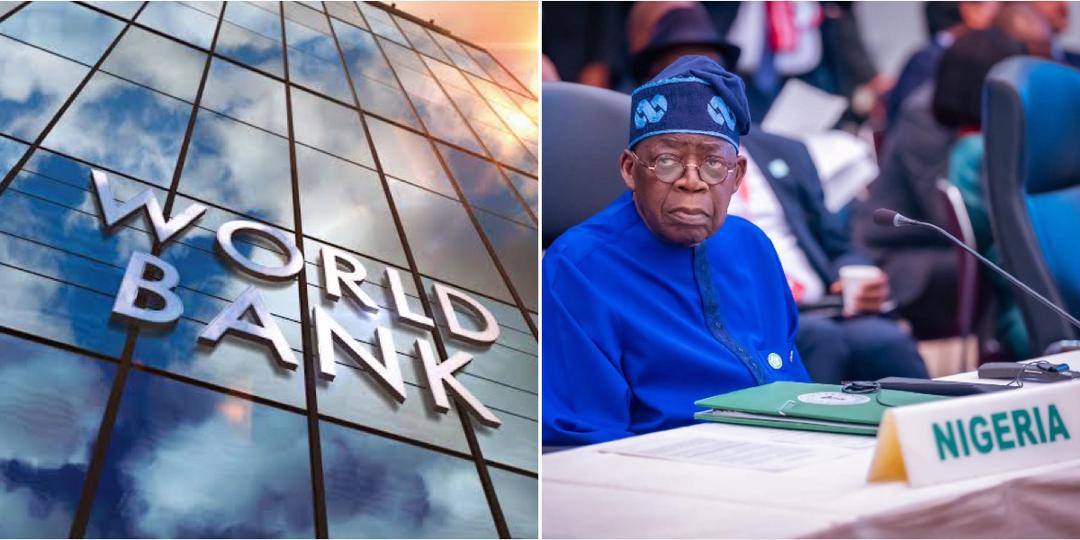
The World Bank canceled Nigeria’s request for a loan of 718 million dollars

- May 27, 2026
- 43
- Gossip Gist
The The World Bank and the Nigerian government jointly canceled a $717.7 million loan originally approved to support reforms in the country’s struggling power sector.
World Bank documents showed the canceled amount represents the remaining balance of the $1.52 billion Performance-Based Energy Sector Recovery Operation, introduced to improve electricity supply, strengthen the sector’s finances and reduce the burden on public funds.
The cancellation comes amid worsening tariff shortfalls, rising operating costs and ongoing challenges affecting Nigeria’s electricity industry.
The program ends earlier than planned
According to the document on the restructuring of the World Bank, there is no further payment it will be created according to the program after the approval of the restructuring.
“The restructuring will result in the cancellation of the entire outstanding balance of $717.7 million in equivalent value, and no further payments will be made under the Program following the approval of this restructuring,” the bank stated.
The World Bank also revealed that the closing date of the program has been moved from June 30, 2027 to May 31, 2026.
The original program was approved in June 2020 with about $752.5 million in funding, while an additional package of $763.5 million was approved in June 2023 to deepen reforms and address remaining weaknesses in the sector.
Together, both facilities were worth about $1.52 billion.
Reason for canceling the loan
The World Bank explained that Nigeria’s electricity sector continues to face serious structural problems despite years of reforms and financial interventions.
According to the report, challenges such as poor distribution performance, transmission bottlenecks, underutilization of generation capacity and financial instability remain major concerns.
The bank noted that large technical and commercial losses, combined with inadequate cost recovery, have created huge gaps between electricity revenues and operating costs.
“These constraints have created persistent funding gaps, mostly in the form of tariff shortfalls, which creates liquidity pressures throughout the value chain and weakens the operational and financial performance of the sector’s institutions,” the report states.
The devaluation of the Naira worsened the crisis
The World Bank further linked the program’s problems to the liberalization of Nigeria’s foreign exchange market in June 2023, leading to a sharp depreciation of the naira.
According to the bank, the decline in the value of the naira has significantly increased the cost of natural gas used to generate electricity since gas prices are denominated in dollars.
“The liberalization of the foreign exchange market in June 2023 led to a significant depreciation of the local currency Naira, resulting in a large increase in the prices of natural gas, which is used to generate more than 70 percent of the electricity injected into the national power system,” the said report.
The bank added that electricity tariffs remained largely unchanged for consumers despite increasing production costs, except for band A users whose tariffs were adjusted in April 2024.
As a result, the annual tariff shortfall has reportedly increased from N140 billion in 2022 to about N1.9 trillion in 2024 and 2025.
Small payment and reform delays
Although the original program achieved major milestones and disbursed most of its funds, the additional financial package has struggled to meet key reform conditions.
The World Bank revealed that only about nine percent of the additional funding was disbursed before the cancellation.
“Of the AF combination of loans and credits totaling USD 763.5 million, only 9 percent has been disbursed, which is in line with previous PforR results,” said the bank.
The institution blamed implementation delays, the lack of a sustainable funding framework and verification challenges involving sectoral institutions for the poor performance.
The report also notes that recent financing plans have failed to provide sufficient sources of financing to cover growing tariff deficits.
“Recent funding plans have not fully identified sufficient funding sources to cover the tariff shortfall, nor have they established a credible path to reduce them,” is added in the report.
The FG warns of delays in loan approval
Meanwhile, the Accountant-General of the Federation, Shamseldeen Ogunjimi, recently warned that Nigeria may reject World Bank loans if delays in approvals and disbursements continue.
Speaking during a meeting with the World Bank delegation in Abuja, Ogunjimi stressed that Nigeria expects timely processing of funding requests as the funds were loans and not grants.
“If approvals take more than six months, the Nigerian government may no longer honor such agreements,” he said.
However, Mansir Nasir explained that World Bank project funds are usually released in phases, depending on project progress and financing conditions.
Despite the latest cancellation, Nigeria remains the third largest debtor to the International Development Association, behind Bangladesh and Pakistan.






Add Comment