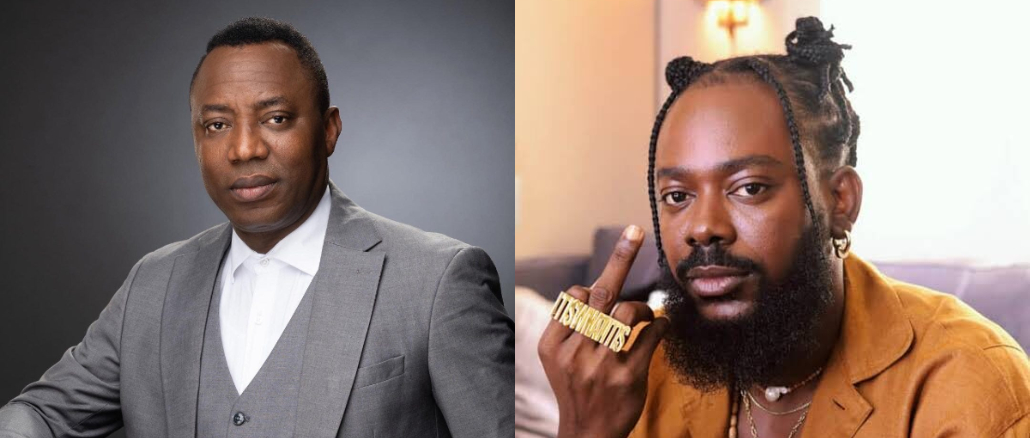
“This is oppression” – Sowore criticizes Adekunle Gold for jailing X user

- May 20, 2026
- 76
- Entertainment
- Human rights activist Omoyele Sowore has criticized singer Adekunle Gold over legal actions taken against social media users.
- A user was jailed for over two years for allegedly spreading false statements about Adekunle Gold and his family.
- Sowore questioned the ethics of taking such legal action, citing concerns about freedom of expression.
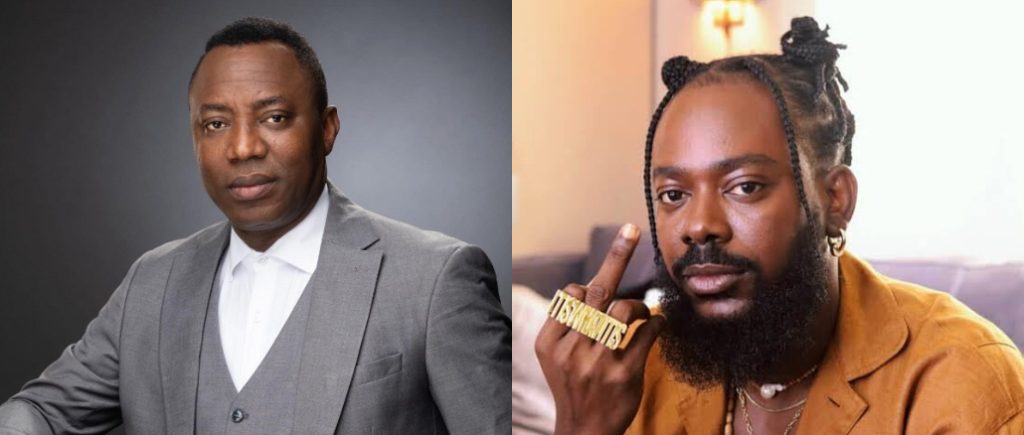
Human rights activist and former presidential candidate Omoyele Sowore has condemned singer Adekunle Gold over reports of the jailing of a social media user accused of spreading false statements about the artiste and his family.
In a viral interview that has been doing the rounds on the internet, Sowore questioned the decision of Adekunle Gold and his wife, singer Simi, to initiate legal action that allegedly saw the young man serve more than two years in prison over comments posted on X (formerly Twitter).
He argued that public figures should be able to tolerate misinformation online rather than resorting to law enforcement against critics or social media users.
“How can Adekunle Gold, after attaining a certain level of fame and fortune, send someone to prison for two years for a statement that everyone knows is false?” Sowore said. He added that he himself faced similar situations, noting that he once received false information about his own family, but decided to check it out and move on.
The activist further cited other global examples, including former US President Donald Trump and a Kaduna priest who was falsely declared dead during the COVID-19 period, to highlight how misinformation is widely spread online.
According to Sowore, the incident reflects what he described as a growing tendency among influential individuals to abuse their power when they feel attacked online.
“How can someone work with police and prosecutors to imprison another person for years over a few lines on Twitter? People complain about oppression, but when they gain influence, it often gets worse,” he added.
The issue has further fueled ongoing debates in Nigeria over cybercrime laws, freedom of expression and the arrest of individuals for controversial online posts.
Check out the post below:





Add Comment